Introduction
AI is now at the heart of enterprise innovation, but it comes with massive infrastructure demands. Training and running AI workloads require enormous compute power, vast storage, and high-performing databases—pushing cloud spending to unprecedented levels. For 84% of enterprises, managing these costs has become the single biggest IT challenge.
Enteros addresses this challenge by combining SQL AI–driven query optimization, intelligent root cause analysis, and FinOps strategies to help enterprises scale AI workloads efficiently while keeping cloud costs under control.
This blog explores how Enteros empowers organizations to optimize database performance in the age of AI, reduce unnecessary cloud spending, and achieve cost predictability while sustaining innovation at scale.
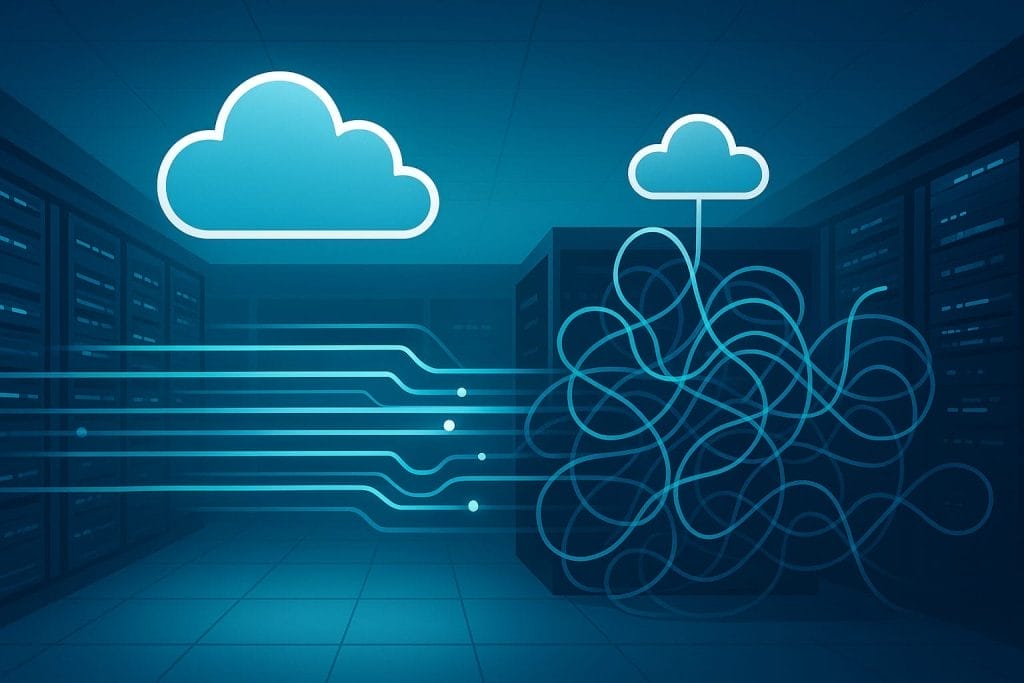
The Cloud Cost Challenge in the AI Era
As enterprises deploy more AI and data-driven applications, they face mounting database and infrastructure challenges:
Exploding Data Volumes → AI and ML workloads generate massive structured and unstructured data that strain traditional databases.
Unpredictable Cloud Spend → Without FinOps visibility, costs from compute, storage, and query inefficiencies quickly spiral out of control.
Performance Bottlenecks → Slow queries and misconfigured databases delay model training, analytics, and production workflows.
Downtime Risks → Even short interruptions in mission-critical AI pipelines lead to productivity losses and revenue impact.
Hybrid Complexity → Managing SQL, NoSQL, and SaaS databases across multi-cloud and on-prem environments increases operational complexity.
How Enteros Tackles the Cloud Cost Challenge
1. SQL AI for Performance Tuning
Detects inefficient queries, indexing problems, and execution bottlenecks.
Automates tuning recommendations to accelerate AI and analytics workloads.
Improves responsiveness for both operational and analytical systems.
2. AI-Powered Root Cause Analysis
Goes beyond alerts to identify why performance issues occur.
Uses statistical AI to pinpoint the root cause—query inefficiency, cloud misconfiguration, or resource overuse.
Reduces Mean Time to Resolution (MTTR) for AI-driven applications.
3. Cost Optimization with FinOps
Allocates shared cloud database costs to departments and projects.
Forecasts resource usage to avoid budget overruns.
Identifies underutilized instances and rightsizes infrastructure for AI workloads.
4. Scalability and Resilience
Dynamically scales resources for unpredictable AI workloads.
Ensures uptime during high-demand cycles such as model training or real-time inference.
Supports hybrid and multi-cloud architectures seamlessly.
Real-World Use Cases
AI Model Training Efficiency A global enterprise reduced training time for large AI models by 30% after Enteros optimized SQL queries and indexing in its data warehouse.
Cost Visibility in Cloud AI Projects A financial services firm used Enteros FinOps integration to track and allocate AI cloud costs across departments, cutting wasted spend by 25%.
Real-Time Analytics A retailer running recommendation engines in real time leveraged Enteros to reduce query latency, ensuring faster customer insights.
Hybrid AI Infrastructure Optimization A biotech company with multi-cloud AI pipelines improved resilience and avoided downtime by using Enteros’ root cause analysis for database performance issues.
Benefits of Enteros in the AI Era
Improved Database Performance → Faster queries, reduced latency, and optimized AI workloads.
Cloud Cost Control → FinOps strategies ensure spending transparency and predictability.
Operational Resilience → AI-driven root cause detection prevents downtime in mission-critical applications.
Scalability at Speed → Seamless support for growing AI data volumes and workloads.
Competitive Advantage → Faster innovation cycles without runaway costs.
Frequently Asked Questions
Why is cloud cost management the #1 challenge for enterprises adopting AI? AI workloads demand significant compute and storage resources, which, without visibility and optimization, result in skyrocketing cloud costs.
How does Enteros help reduce cloud costs for AI-driven organizations? By integrating FinOps, Enteros forecasts usage, attributes costs, and identifies underutilized resources to eliminate wasteful spending.
Can Enteros optimize both SQL and NoSQL databases used in AI pipelines? Yes. Enteros supports SQL, NoSQL, cloud-native, and SaaS databases across hybrid and multi-cloud environments.
How does Enteros ensure uptime for AI-driven operations? Through predictive AIOps, Enteros identifies anomalies early, scales resources dynamically, and prevents failures before they impact workflows.
What makes Enteros different from traditional monitoring tools? Unlike tools that only send alerts, Enteros combines SQL AI and AIOps to diagnose, resolve, and optimize database performance automatically.
The views expressed on this blog are those of the author and do not necessarily reflect the opinions of Enteros Inc. This blog may contain links to the content of third-party sites. By providing such links, Enteros Inc. does not adopt, guarantee, approve, or endorse the information, views, or products available on such sites.
Are you interested in writing for Enteros’ Blog? Please send us a pitch!
RELATED POSTS
How Can Enterprises Reduce Database Costs Without Sacrificing Performance?
- 11 September 2026
- Database Performance Management
Enterprises can reduce database costs without sacrificing performance by identifying inefficient SQL, right-sizing infrastructure, eliminating unused capacity, analyzing workload patterns, improving storage efficiency, and using database observability to connect resource consumption with application performance. Database cost optimization helps organizations control infrastructure spending while Enteros UpBeat provides performance intelligence, workload visibility, predictive analytics, and Cloud FinOps … Continue reading “How Can Enterprises Reduce Database Costs Without Sacrificing Performance?”
How Can AI Detect Database Performance Anomalies Before They Cause Downtime?
AI can detect database performance anomalies by continuously analyzing workload patterns, SQL behavior, latency, resource usage, waits, and historical baselines. AI database anomaly detection helps identify unusual behavior before it becomes a larger outage. With Enteros UpBeat, IT teams can detect emerging issues earlier, investigate root causes faster, and improve database reliability across complex enterprise … Continue reading “How Can AI Detect Database Performance Anomalies Before They Cause Downtime?”
How Can Financial Institutions Detect Database Bottlenecks Before Transaction Delays Occur?
- 10 September 2026
- Database Performance Management
Financial institutions can detect database bottlenecks before transaction delays occur by continuously monitoring query latency, database waits, CPU, memory, I/O, locking, workload changes, and transaction throughput. By combining performance baselines, anomaly detection, SQL intelligence, predictive analytics, and automated root cause analysis, teams can identify emerging issues early and optimize databases before customer-facing banking, payment, or … Continue reading “How Can Financial Institutions Detect Database Bottlenecks Before Transaction Delays Occur?”
What Role Does AI-Powered Database Monitoring for Banking Play in Performance Management?
AI-powered database monitoring for banking helps financial institutions detect anomalies, identify performance bottlenecks, analyse SQL workloads, predict capacity risks, and accelerate troubleshooting. By combining database observability with automated analysis, AI-powered database performance supports faster incident response, more reliable transactions, better resource utilisation, stronger capacity planning, and smarter cloud cost decisions across increasingly complex banking database … Continue reading “What Role Does AI-Powered Database Monitoring for Banking Play in Performance Management?”